I distinctly remember the season when I first encountered the term hate speech. It was while I was in high school in the late 1990s. The tragic death of college student Matthew Shepard was dominating the news in late 1998. And I recall hearing on the news broadcasts and in conversations with friends the novel idea that “hate speech” should and could be regulated and punishable by law. I felt a visceral violation as an American in reaction to this concept. I had been taught growing up, and indeed worked out myself, the importance of freedom of speech as given in the first amendment to the constitution.
“Congress shall make no law…..abridging the freedom of speech”. In other words as an American we have the freedom to say anything that we want to say. Full stop. No further discussion needed. I am free to speak whatever words I choose to speak in whatever way I choose to speak them. We also understand that historically there are caveats to this freedom whether wrong or right. You cannot threaten the life of the President, you can’t say bomb on an airplane, and you cannot libel someone without threat of a lawsuit. And while those things are perhaps unconstitutional, they are very limited in scope and, quite frankly, anomalies for the average American.
But “hate speech” was different.
For the government to be able to make a law abridging the freedom of speech by labeling it as a crime seemed to me to be a sinister violation of my liberty. The Matthew Shepard case eventually had an impact on U.S. law, allowing for prosecution of certain types of speech deemed as potentially inciting violence (notwithstanding the fact that many questions remain about the actual motive of the killing).
The idea that some speech can be regulated by law is now an accepted fact across the board in America. The frog has been in the boiling water for a few decades now….
Fast forward to 2023. There’s now a new attack on the first amendment that is predicated on the logic of hate speech: “disinformation”. I don’t have any problem with the label of disinformation. Pretty sure it’s just another way to categorize lies (or “untruths” as the kids like to say). I have a problem when the government tries to define what speech qualifies as disinformation, and subsequently polices and shuts down those it deems are spreading such lies.
Let the 1990s be a warning to the 2020s.
If the idea of disinformation is ever enshrined in law similar to hate speech – if our government ever has the ability to identify and punish speech that it deems untruthful – then a new era of persecution for American churches will begin.
With this in mind, it only makes sense for believers to stand up for the right of everyone to say what they choose. That freedom allows that the lines of gospel communication – to a culture that desperately needs it – will remain open.
Excellence in ministry is important; crucially important. Excellence in attitude may be the most important area to demonstrate this crucial value in.
for I have learned in whatever state I am, to be content: I know how to be abased, and I know how to abound. Everywhere and in all things I have learned both to be full and to be hungry, both to abound and to suffer need. I can do all things through Christ who strengthens me. Philippians 4:11b-13
Paul is talking here about his ability to deal with circumstances and situations in life.
And that is really what attitude is – our response to life situations.
Victor Frankl, a Viennese Jew, was interned by the Germans for more than three years. He was moved from one concentration camp to another, even spending several months at Auschwitz. Later he wrote these words:
“We who lived in concentration camps can remember those men who walked through the huts comforting others, giving away their last piece of bread. They may have been few in number, but they offer sufficient proof that everything can be taken from a man but one thing: the last of human freedoms – to choose one’s attitude in any given set of circumstances….”
Victor Frankl
As Frankl points out rightly, we have the ability to choose our attitude- every single day. It has been said that life is 10% of what happens to us and 90% how we respond to it. And I think that is true.
Paul is saying in Ephesians that his attitude in all things is consistent, constant. No matter what circumstance he finds himself in, he has learned how to maintain a good attitude.
The Secret of Excellence in Attitude
The word “learned” in verse twelve means “to learn the secret, to be initiated”.
Some of you know our ministry Honest Deceiver Ministries that uses magic and illusion to share the gospel. And when someone wants to learn magic, they must be initiated – the secrets must be revealed to them. They must learn through practice and experience. Paul is saying that he has learned the secret of being content, of having a good attitude, through his life experiences. And then he tells us the secret:
I can do all things through Christ who strengthens me. Philippians 4:13
The secret of excellence in attitude is remembering and relying on the strength of Christ in me.
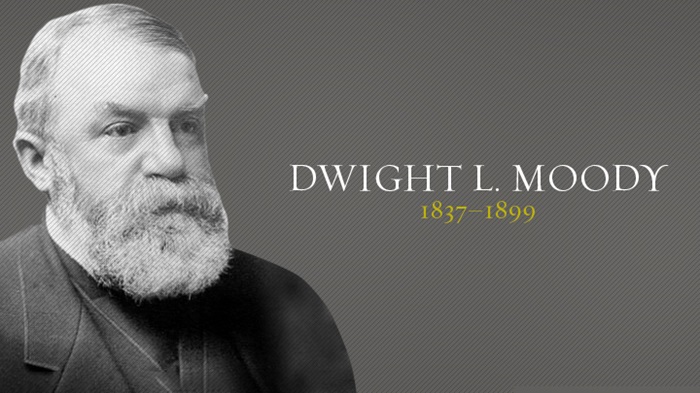
In stark contrast to the faith-alone model of fundraising stands the method on the other end of the spectrum – direct appeal fundraising. The father of this model is the Apostle Paul, as we have already seen. Yet the champion of this model in modern times is Dwight L. Moody, the powerful American preacher from the late 19th century.
D. L. Moody was highly opposed to a faith-alone model of fundraising. In fact, he saw incorporation of it as a lack of faith. For Moody, faith meant that you had to do something to show your faith. The Bible says “faith without works is dead”, and Moody could not have agreed more.
“I show my faith when I go to men and state to them the needs of the Lord’s work and ask them to give to it”, Moody said.
And ask them he did.
R. A Torrey, Moody’s successor in the ministry said, “millions of dollars passed into Mr. Moody’s hands, but they passed through; they did not stick to his fingers”.
D.L. Moody was not shy about his direct appeal fundraising. He had no problems “talking money” with any potential supporters that he met or talked with. Again, he did not believe that asking showed a lack of faith; rather, it showed the presence of faith in his view.
D. L. Moody was notorious for directly asking whomever he met for money. He would ask beggars, princes, and everyone in between if they would like to have a part in what God was doing through his ministry. Moody truly believed that as God’s servant it was his job to ask for money. He said “Blessed are the money-raisers, for in heaven they shall stand next to the martyrs”. That is a very high view of fundraisers indeed! Whether you agree or disagree with him, one thing is for certain: D. L. Moody followed the biblical pattern of direct appeal fundraising, and God blessed him mightily for it with a ministry that impacted a nation.
So, as we have learned in this series of posts, it is important to have a clear perspective on the biblical and historical precedents of fundraising in order to make wise, God-honoring decisions. Direct appeal fundraising, bathed in humility, prayer, and ultimate reliance on God’s provision, is the foundation for successful missionary activity.
Here’s to better, biblical, effective fundraising that will honor the Lord, empower the giver, and strengthen the ministry!
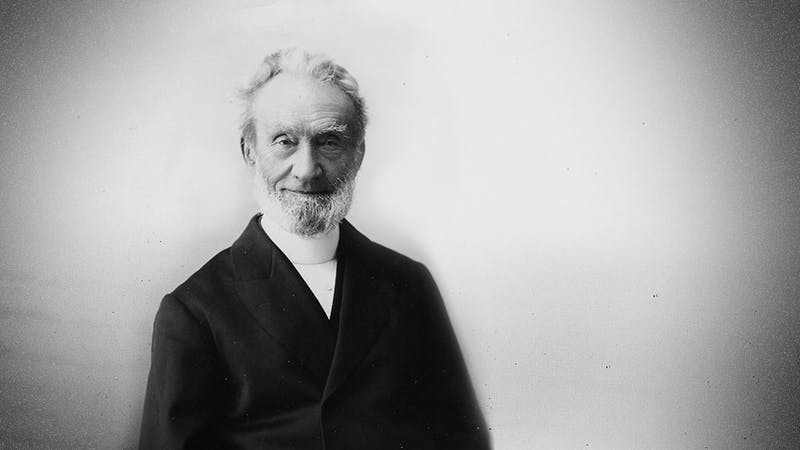
A legend of sorts has built up around George Müller and his faith-alone fundraising. Time has a way of taking the edges off of stories, and reducing complex people to simple ones. People quote the stories of God providing for his ministry solely through his faith alone approach. They tell how he never talked about his ministry; how he only closed himself in his room and asked God to provide.
Yet they create the doctrine of “faith-alone” fundraising around a story that is at best only half-truth. The stories that they base these claims on are not the full picture. It’s like seeing half of a painting and filling in the rest yourself.
Here are some facts about George Müller’s “faith-alone” ministry that we know from his own writings and speaking:
Müller told his “stories” in at least 42 countries around the world. He travelled the world telling the story of his orphanage and how God was providing through prayer-alone.
It was only after he began speaking about some needs met that the wave of interest started. Muller did not begin receiving a great sum of money until he began discussing the fact that he has asked God for such.
He published in the paper the names of donors and the amounts they gave Hardly a “faith alone” strategy, Muller used a brilliant marketing strategy worthy of the best non-profit fundraisers today: he told people what others were giving, in order to encourage them to the same level of giving.
He had offering baskets near the front of the orphanage where he invited people to come and pray. While he was certainly a man of prayer, he was also a man of opportunity. Muller made sure the people had an avenue and ability to make donations, including having visible spaces at his orphanage to make a contribution. While not directly asking for money, it is certainly indirectly asking.
In short, Müller did a lot of talking and promoting about his faith-alone process. The ludicrousness of building a “faith-alone” myth around this is easy to see. By publicly talking about only asking God and the subsequent provisions, he was violating his very premise!
I do not fault George Müller. He is not the one who promoted a faith-alone fundraising philosophy as the answer to funding your ministry. He was simply an honest, clever fundraiser who knew what to say to engage people with his righteous cause. How powerful to tell stories of how God answered prayers! It is those that followed him, those who sought to learn from him that have promoted the myth.
The danger is for those pupils that really believe the myth; that really believe that they are not to open their mouths and seek provision from God’s servants. In following this philosophy, they are self-defeating and possibly causing God to withhold the blessings He has for them.
If you think I am being to harsh, here is a quote from D.L. Moody on George Müller: “His emphasis on making no appeals was itself an appeal”. Moody recognized what we all need to recognize as well: that Muller was a great man, with great fundraising methods, who has been largely romanticized in our modern day. The faith-alone myth is built around a falsity, and the more fundraisers that know it, the better for them, and the better for the gospel.
Speaking of D. L. Moody, my next post will bring us in to a discussion of his method of fundraising, that of direct appeal.